Architectural concrete as a platform for architecture-engineering dialogue
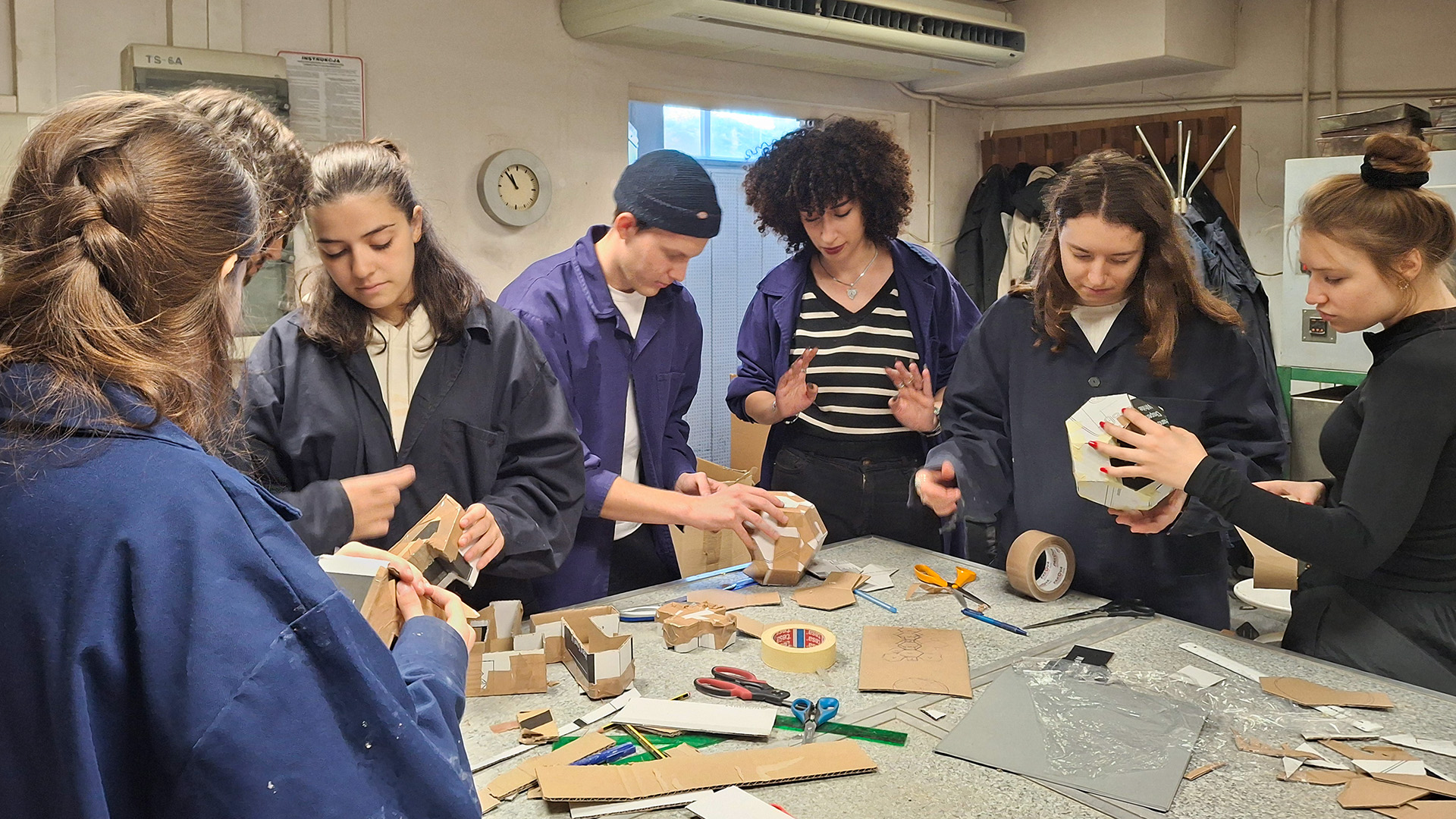
Students working with architectural concrete
Students of the Faculty of Architecture enrolled in the English‑medium course Contemporary Building Materials visited the Faculty of Civil Engineering, where they worked with architectural concrete, creating their own sculptural forms. The joint workshop offered an opportunity for creative experimentation and an important lesson in interdisciplinary collaboration.
The classes allowed students to confront their architectural vision with the technological challenges involved in designing and producing concrete elements. Working in the laboratory facilities of the Faculty of Civil Engineering gave them insight into the material and technological limitations that concrete technologists face every day when bringing architectural concepts to life.
The assignment combined creative and technical elements. Students designed and produced sculptures made of architectural concrete, experimenting with form, scale and material texture. This year’s works reflected themes important to the participants: a number, a geometric solid and a concrete crown – each merging symbolic meaning with technological precision.
As the students themselves noted, the process required commitment and further practice.
“We still have some training ahead of us,” they admitted. “The project sparked an interesting and valuable discussion.”

Students working with architectural concrete : the process behind creating original sculptural forms
The Contemporary Building Materials course is coordinated by Prof. Tomasz Piotrowski, with classes led by Dr Maja Kępniak. The Dean of the Faculty of Civil Engineering, Prof. Andrzej Garbacz, also contributes to the course.
“Initiatives like this highlight the importance of integrating architectural and engineering perspectives already during students’ academic training,” notes Prof. Andrzej Garbacz.
The workshop once again proved that architectural concrete can be more than a structural material – it can become a medium for dialogue, experimentation and interdisciplinary cooperation between engineering and architecture.
© 1998-2026 Warsaw University of Technology
Pl. Politechniki 1, 00-661 Warsaw, Poland