
International project focused on developing a personalised therapy for retinal diseases
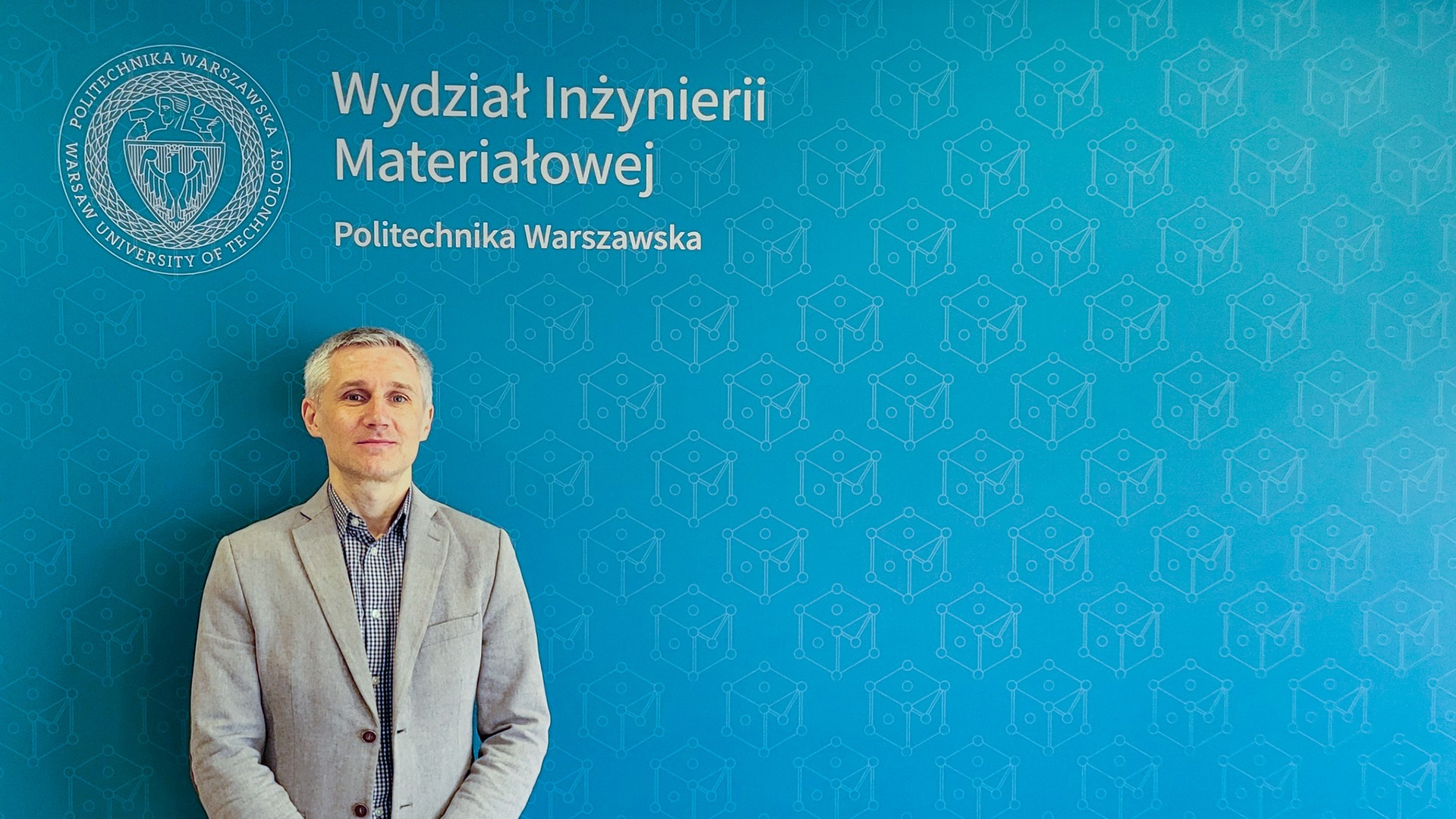
Dr Marcin Heljak – Project Leader of “RETIN-A-EYE – Machine Learning Platform for Personalised Intravitreal Anti‑VEGF Therapy Using Drug‑Loaded Polymeric Nanoparticles”
The Faculty of Materials Engineering is launching an international research project called ‘RETIN-A-EYE – Machine Learning Platform for Personalised Intravitreal Anti‑VEGF Therapy Using Drug‑Loaded Polymeric Nanoparticles’. The project is funded by the National Science Centre under the M‑ERA.NET 3 Call 2025 programme.
The research will be carried out by a multidisciplinary consortium composed of academic partners: Ege University, Ming Chi University of Technology, the Middle East Technical University MEMS Center, the Medical University of Warsaw, and the Warsaw University of Technology – Faculty of Materials Engineering. The project is coordinated by the Faculty of Materials Engineering at WUT, and its project leader is Dr Marcin Heljak.
A personalised therapy for retinal diseases
The aim of the project is to create an innovative platform that helps personalise and optimise treatment for eye diseases caused by abnormal blood vessel growth in the retina. The most serious of these include age-related macular degeneration, cystoid macular oedema and diabetic retinopathy – all of which are major causes of serious sight loss and blindness worldwide.
Current therapies involve administering anti‑VEGF drugs directly into the vitreous body of the eye through intravitreal injections. Although this method helps reduce systemic side effects, it causes considerable discomfort for patients and carries a risk of complications. For this reason, one of the key challenges in modern ophthalmology is to reduce the frequency of drug administration while simultaneously increasing the effectiveness of treatment.
Polymeric nanoparticles and AI
In the RETIN‑AEYE project, researchers will develop controlled ‑drug ‑release systems based on biodegradable polymeric microparticles. This approach could allow active substances to be released gradually inside the eye, potentially reducing the number of injections patients need in the future.
A key part of the project will also involve using AI methods to tailor drug release parameters to each patient’s individual needs and to the specific characteristics of their condition.
“The main innovation of the project is the improvement of currently used drug ‑release systems based on biodegradable polymer particles, which have significant limitations such as an initial burst release of the drug or unpredictable material degradation,” explains Dr Heljak. “To address these issues, we will apply atmospheric pressure‑ plasma (APP) modification to polymeric microparticles. This will allow us to achieve better control over drug release, enhance the safety and effectiveness of ophthalmic therapy, and tailor its parameters to the individual needs of each patient.”
Towards modern, personalised ophthalmology
RETIN‑A‑EYE is an interdisciplinary project with strong translational potential, bringing together expertise in materials engineering, medicine, nanotechnology and data analysis.
The research team aims to develop solutions that will, in the future, contribute to:
- improving patient safety and comfort,
- increasing the effectiveness of retinal disease treatment,
- reducing healthcare costs.
The project represents an important step towards the development of personalised ophthalmic therapies based on advanced materials and AI-based tools.
© 1998-2026 Warsaw University of Technology
Pl. Politechniki 1, 00-661 Warsaw, Poland