International project on materials for the energy sector

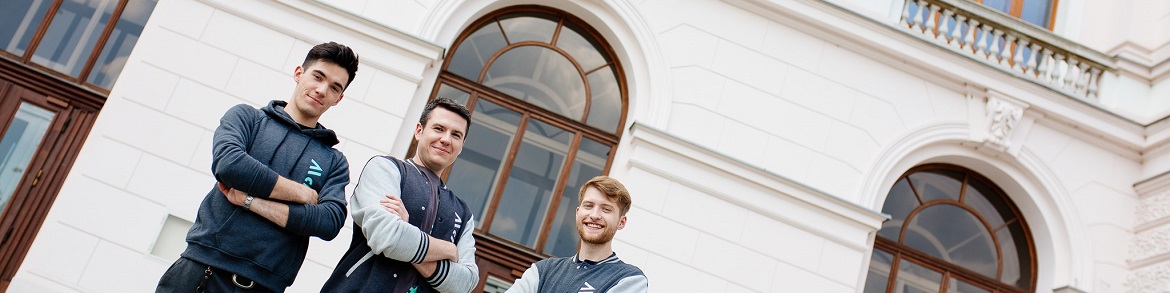
The WUT team implementing the ANIMATE project. From left to right: Witold Chromiński, PhD , Prof. Jan Wróbel, Rafał Molak, PhD.
Researchers from the Faculty of Materials Science and Engineering at the Warsaw University of Technology will take part in the international research project ANIMATE – Additive maNufacturing Innovative MATerials for Energy applications, carried out within the CONNECT-NM framework – a new European Union funding mechanism for research projects.
The leader of the entire consortium is the National Centre for Metallurgical Research (CENIM), Spanish National Research Council (CSIC). The project involves researchers from Poland, Germany, Finland, Italy, and Ukraine. Among the Polish partners, alongside the Faculty of Materials Science and Engineering of WUT, is the National Centre for Nuclear Research – NOMATEN Centre of Excellence.
The aim of the ANIMATE project is to develop a new generation of high-entropy alloys (HEAs) manufactured using additive manufacturing (3D printing) technologies for energy applications, in particular for Generation IV nuclear reactors. A key research challenge is improving the materials’ resistance to high temperatures, corrosion, and radiation damage.
The project coordinator at the Faculty of Materials Science and Engineering is Prof. Jan Wróbel, who simultaneously serves as the leader of the work package dedicated to atomistic modelling and simulations of HEA alloys.
“Within this work package, using machine learning methods, we will develop an interatomic potential for molecular dynamics simulations of a six-component Fe–Mn–Ni–Cr–Ti–Al alloy,” explains Prof. Jan Wróbel. “This research will allow for a better understanding of phase stability, defect behaviour, and strengthening mechanisms under high-temperature and irradiation conditions, and will directly support the interpretation of experimental results.”
A significant role in the project is played by Witold Chromiński, PhD, who leads the task entitled “Advanced micro- and nanostructural characterisation of 3D-printed HEA compositions.” This work encompasses advanced micro- and nanostructural characterisation of additively manufactured HEAs using techniques such as SEM, TEM, STEM, and EBSD.
Advanced mechanical testing based on miniature specimen techniques will also be carried out within the project. This part of the work will be led by Rafał Molak, PhD. In the first stage, static bending tests using the Small Punch Test (SPT) are planned, and the obtained results will serve as a basis for further analyses, including creep tests using the Small Punch Creep (SPC) method.
The total budget of the ANIMATE project amounts to approximately EUR 1,740,000, of which around EUR 870,000 is funded by the European Union. The participation of WUT researchers in this initiative strengthens international research cooperation and confirms the expertise of the University’s academic staff in the field of advanced materials for next-generation energy systems.
© 1998-2026 Warsaw University of Technology
Pl. Politechniki 1, 00-661 Warsaw, Poland