Our student interns at the Max Planck Institute for Intelligent Systems
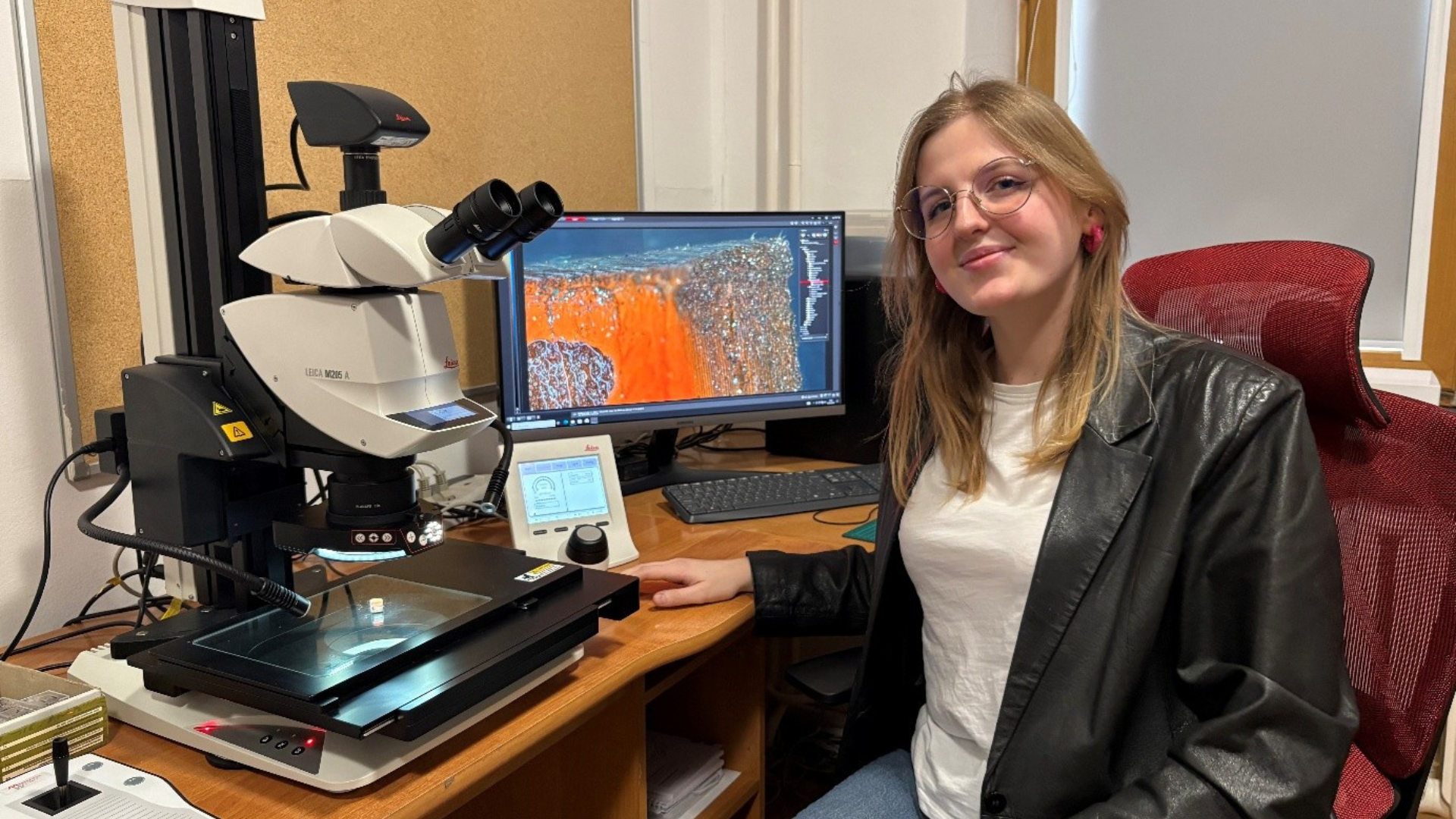
Sabina Sypniewska during her internship at the Max Planck Institute for Intelligent Systems in Stuttgart
Sabina Sypniewska, a student at the Faculty of Automotive and Construction Machinery Engineering of the Warsaw University of Technology, has been selected for a prestigious three-month internship at the Max Planck Institute for Intelligent Systems in Stuttgart as part of the Robotics Institute Germany Internships (RIGI) programme.
This is a significant achievement, especially given that the Max Planck Society is one of the most renowned scientific organisations in the world. It ranks third in terms of the number of publications in leading scientific journals, and its community includes as many as 31 Nobel Prize laureates. In this year’s edition of the programme, only 20 candidates from around the world were selected, with a success rate of approximately 2%. Sabina is one of only two participants from Europe to have been admitted.
On a daily basis, the student develops her research interests at the SMaRT Lab (Soft Robotics and Intelligent Materials Laboratory) at the Faculty of Automotive and Construction Machinery Engineering. The team led by Piotr Bartkowski, PhD, focuses on research in areas including wearable electronics and innovative soft robotics solutions. It was there that Sabina gained the research experience and technical skills that became a key part of her successful application. The idea to apply for the internship programme arose with the support of her supervisor, who helped her both in preparing the application and in getting ready for the interview.
Sabina Sypniewska’s achievements to date include co-authoring a scientific article, as well as another publication currently under review. She has also gained research experience during an internship at Seoul National University and has presented her results at a doctoral seminar. She was recently a laureate of the Competition named after Marek Poncyliusz, PhD, for the best thesis defended at the Faculty of Automotive and Construction Machinery Engineering where she was the only woman among the participants.
‘I am very excited about the upcoming internship. I hope to have more opportunities like this in the future, as I would like to pursue a PhD and continue my academic development at our university,’ says the student.
During her internship in Stuttgart, Sabina will work on the project “Design and Fabrication of Programmable Magnetic Robots.” Her research to date has focused primarily on flexible electronics, including flexible energy storage devices. The internship at the Max Planck Institute will provide her with an opportunity to further develop her expertise in a related area, while working with new materials and advanced technologies.
© 1998-2026 Warsaw University of Technology
Pl. Politechniki 1, 00-661 Warsaw, Poland