
Polymers that help maintain hygiene
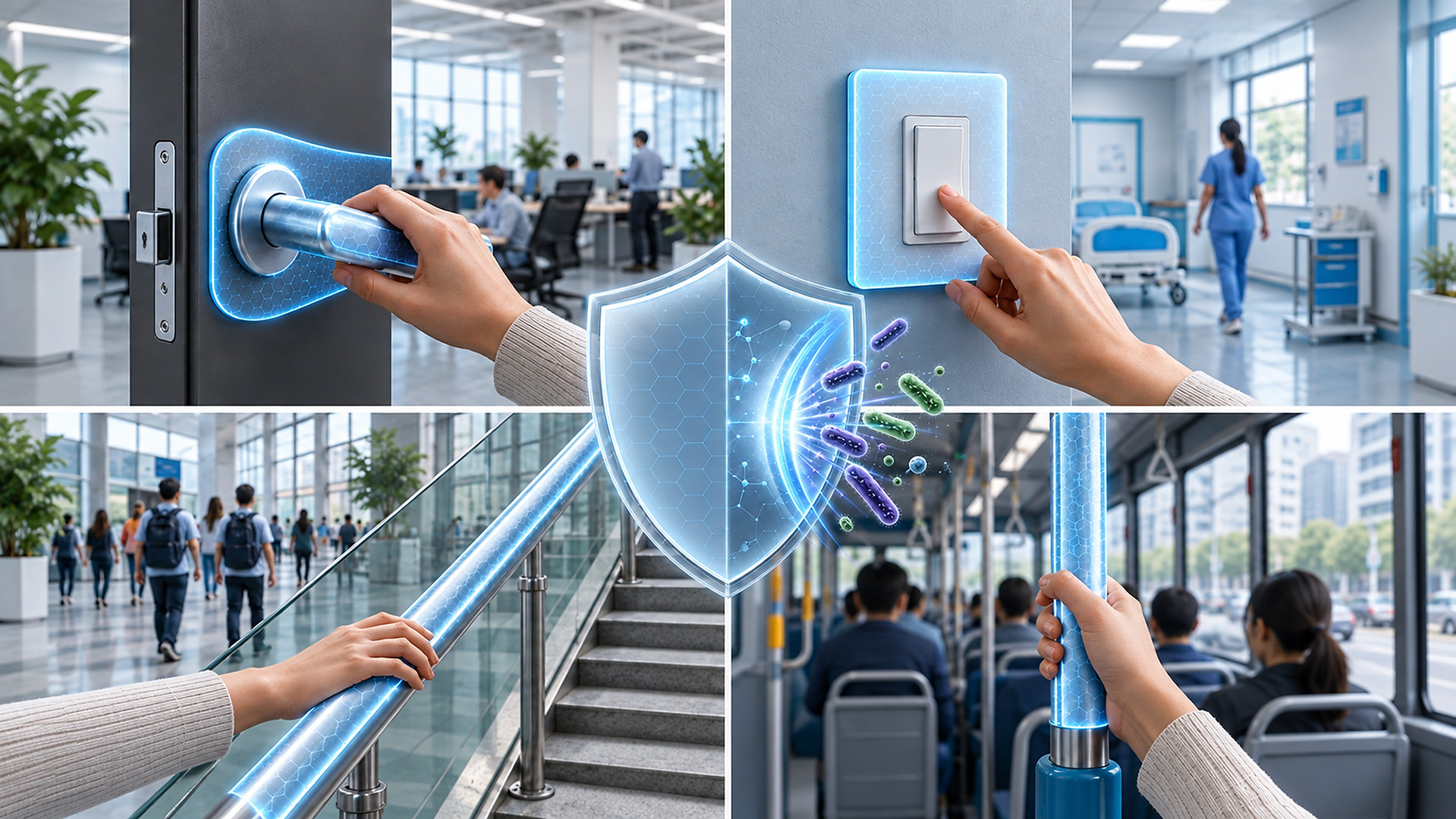
Examples of applications for the antibacterial polymer composition patented by a team from the Faculty of Chemistry
How many people touch the same door handle or light switch, or hold the same handrail or grab pole on a bus each day? Researchers from the Department of Chemistry and Polymer Technology at the Faculty of Chemistry, Warsaw University of Technology, have developed an antibacterial polymer composition – a material that can limit bacterial growth on the surfaces of components made from it.
"Our team has developed an antibacterial polymer composition containing highly effective compounds from the cationic polymer group. Their densely distributed positive charges interact with the negatively charged bacterial cell membrane, destroying the bacteria," explains Anna Iuliano, PhD, the lead inventor of the patented solution. "Crucially for industry, the materials we have designed can be manufactured easily using standard processing techniques such as extrusion and injection moulding. We are currently conducting laboratory studies of surface cytotoxicity and the stability of the biocide within the matrix to ensure that the finished surfaces are completely safe and of the highest quality."
This solution could be particularly valuable wherever maintaining a high standard of hygiene is essential yet difficult because of the large number of users, including workplaces, healthcare facilities, public transport, railway and bus stations, and schools.
The material can be used to make door handles, grips, handrails, switch components, enclosures and other frequently touched surfaces. It is an example of how polymer chemistry can support everyday safety and comfort in public spaces.
© 1998-2026 Warsaw University of Technology
Pl. Politechniki 1, 00-661 Warsaw, Poland