
Smart Railway Switch Heating
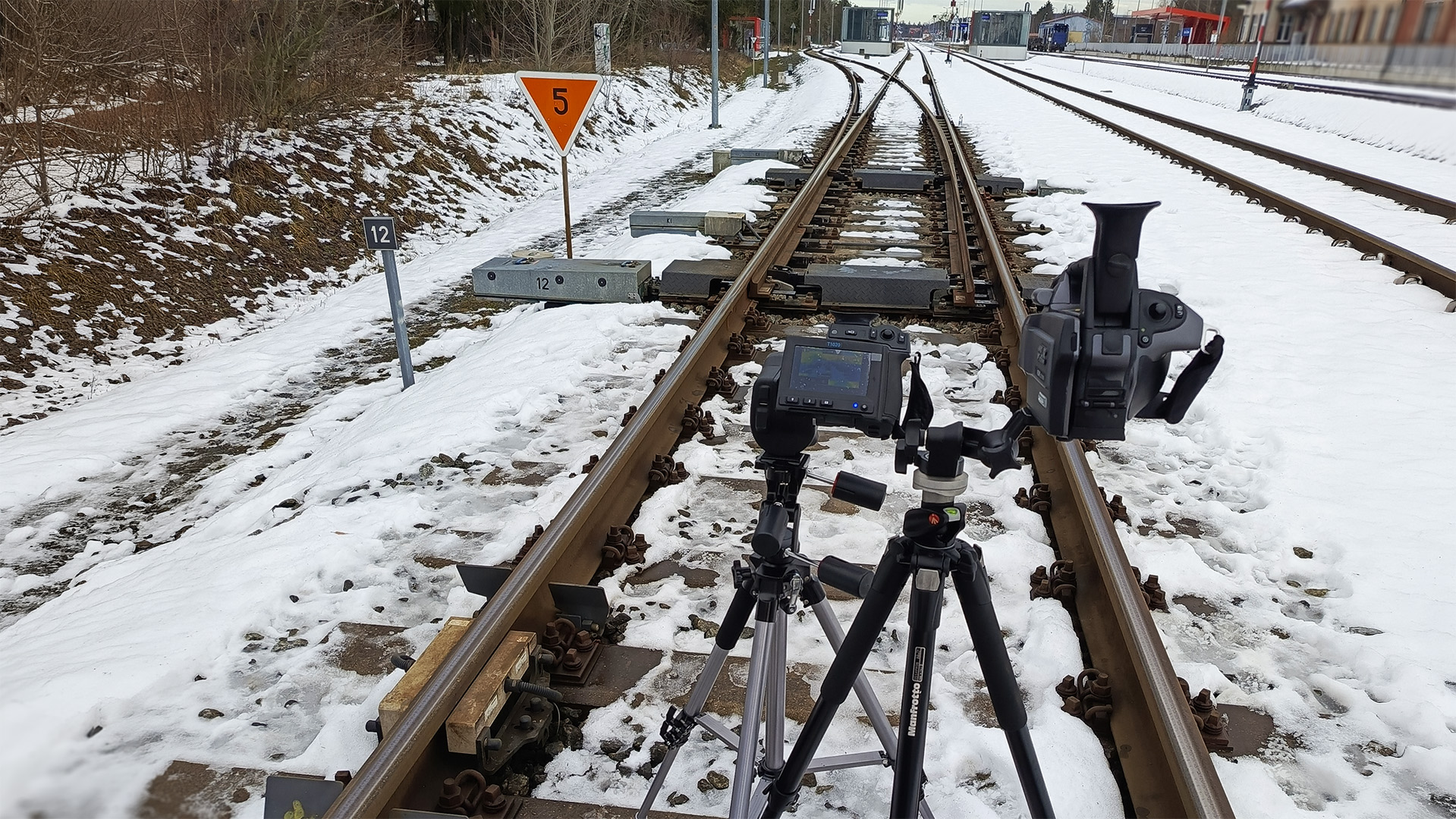
Research conducted as part of the ESAR project
Snow and frost can pose a serious challenge to the reliable operation of railway switches. How can their functionality be ensured during winter while also reducing energy consumption? This question was addressed by a team from the Faculty of Transport at the Warsaw University of Technology, working together with industry partners as part of the ESAR project.
Heating more efficiently, not more intensively
Railway switches contain moving components whose operation can be disrupted by accumulated snow and ice. To prevent this, special electric heating systems are used. The ESAR project focused on optimising heat management. Instead of supplying the same amount of power to every heater within the switch heating system, individual heaters can be controlled separately and adjusted to the specific needs of different parts of the switch. This approach is supported by sensors and solutions designed to improve heat distribution. The objective is to enhance the efficiency of heating equipment while reducing electricity consumption.
The project was carried out by a consortium comprising the Railway Institute, AREX Automation and Measuring Equipment Company, and Warsaw University of Technology. The university’s work was led by Prof. Jacek Kukulski from the Faculty of Transport.
Visualising heat, verifying performance
One of the key tasks undertaken by WUT researchers was to evaluate how the heating system performed under real operating conditions. During field tests at railway stations of Ciechanów, Gdańsk Osowa and Międzylesie in the Kłodzko Valley, researchers used thermal imaging cameras to map temperature distribution across the surface of the monitored components. This enabled them to identify which areas were heating correctly and which required closer attention.
The team also developed a dedicated measurement procedure. This practical tool could help diagnostic and maintenance teams identify irregularities and assess the effectiveness of switch heating systems.
“Our research showed that appropriate control of heating elements and effective heat distribution can reduce energy consumption while maintaining reliable protection of railway switches against snow and ice,” says Prof. Kukulski.
The collaborative nature of the project demonstrated that teamwork is an important factor in achieving ambitious research objectives. It also contributes to the safe conduct of field testing, particularly in the railway transport sector.

Thermal images from research conducted as part of the ESAR project

Thermal images from research conducted as part of the ESAR project
Designed with the existing infrastructure in mind
The ESAR system was developed for both new installations and the modernisation of existing railway switch heating systems. The ability to incorporate existing heating components and cable infrastructure, makes it easier to implement this solution across the rail network.
“The project demonstrates how cooperation between science and industry can support the development of more energy-efficient solutions by improving systems that are essential to the day-to-day operation of railway transport,” says Prof. Jacek Kukulski.
The project was co-financed by the National Centre for Research and Development (NCBR) and PKP Polish Railway Lines as part of the joint BRIK II programme.

Thermal images from research conducted as part of the ESAR project

Thermal images from research conducted as part of the ESAR project
© 1998-2026 Warsaw University of Technology
Pl. Politechniki 1, 00-661 Warsaw, Poland