The Warsaw University of Technology has published a new promotional film on its channels. It is an invitation into the world of the university, allowing viewers to experience it up close and feel its unique atmosphere. The film is available in two language versions (Polish and English), with or without voice-over narration.

On 13–14 March, the International Education Fair took place at the EXPO XXI hall in Warsaw. Among the exhibitors, the Warsaw University of Technology had a strong presence. Over the two days, our stand was visited by hundreds of pupils, teachers, and parents who wanted to learn more about technical studies and the opportunities offered by our University.

The number 13 proved lucky for Warsaw University of Technology. On Friday, March 13, the awards in the 13th edition of the Genius Universitatis competition were presented. The WUT team won the main prize in the Event category, secured two second places in the Gadget and Press Advertising categories, and finished as runner-up in the Genius Stars category, yielding only to one other team in the final. The awards were accepted by Krzysztof Szymański, Head of the Communication and Promotion Office at Warsaw University of Technology. The competition is organised by Perspektywy.

During the Swedish Royal Couple’s visit to Poland, the conference “Scaling Innovation for Europe: Sweden and Poland in Partnership” took place at the Copernicus Science Centre, with the Warsaw University of Technology as a co-organizer. Representatives of the University participated in the event, with students presenting their technological projects.
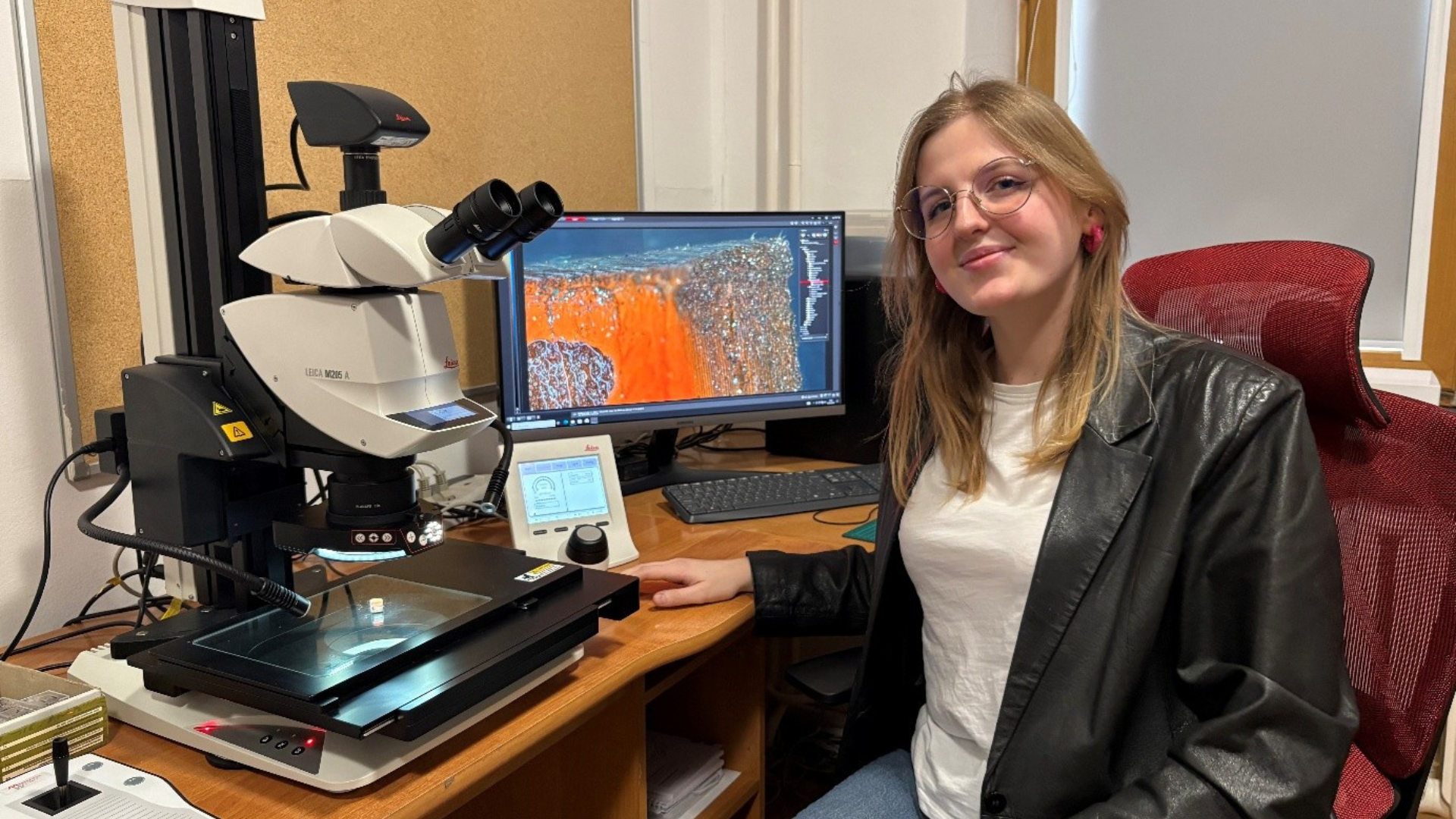
Sabina Sypniewska, a student at the Faculty of Automotive and Construction Machinery Engineering of the Warsaw University of Technology, has been selected for a prestigious three-month internship at the Max Planck Institute for Intelligent Systems in Stuttgart as part of the Robotics Institute Germany Internships (RIGI) programme.

In February, the Universitat Politècnica de València hosted another edition of international workshops, attended by students from the A3 specialisation – Architecture, Technology and Structures – at the Warsaw University of Technology's Faculty of Architecture, under the guidance of Prof. Anna Maria Wierzbicka. The workshops resulted in the construction of a wooden educational pavilion, implementing the principles of the New European Bauhaus initiative within the ENHANCE consortium.