
New strategies for battling cancer
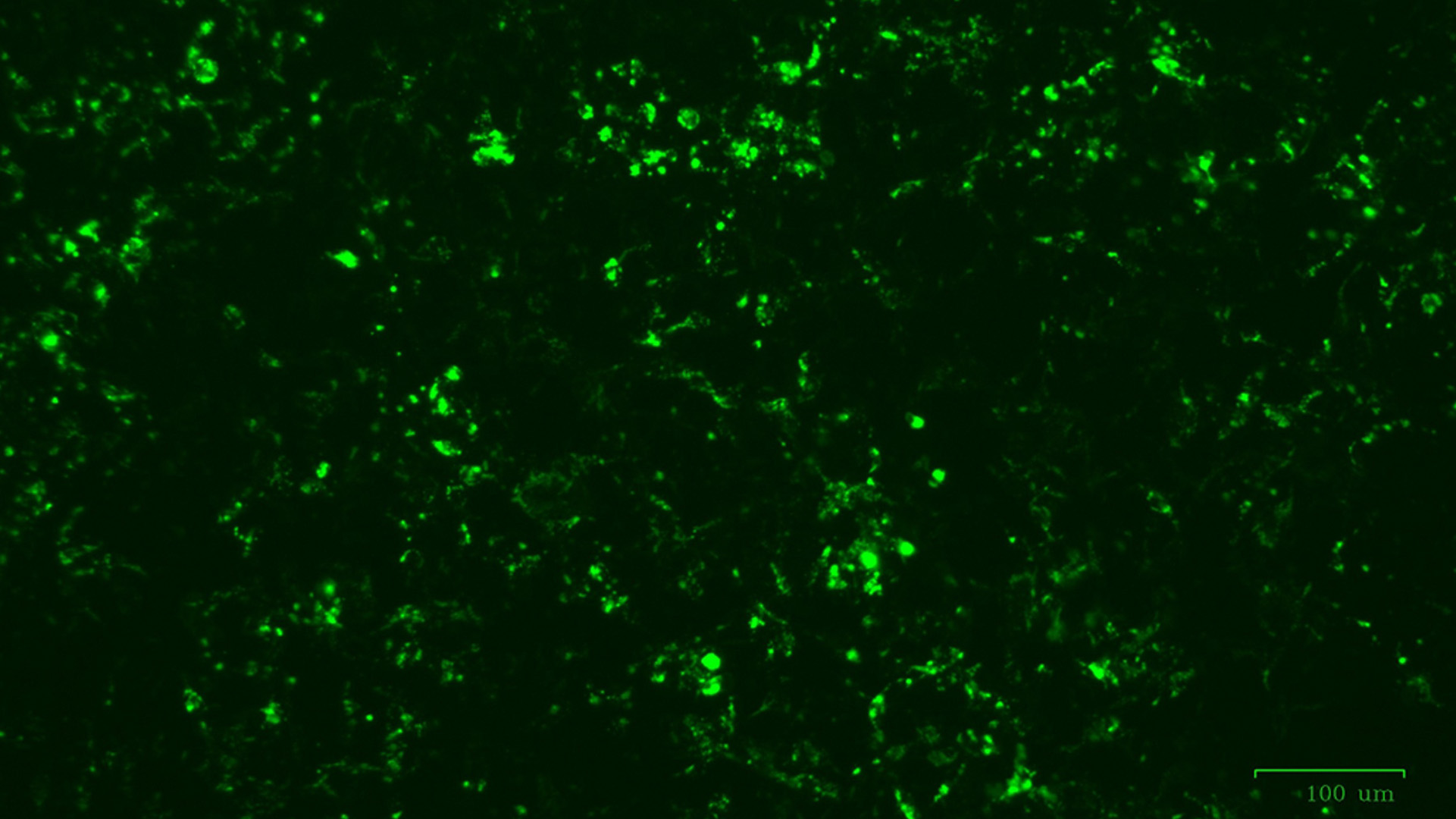
HEK293T cells producing CD63-GFP fusion protein (marker protein of CD63 exosomes with green fluorescent protein)
Patrycja Wińska, PhD, from the Team for Biomedical Chemistry at the Faculty of Chemistry, will implement the project “Human exosomes as natural carriers for inhibitors and degraders of CK2 protein kinase in targeted anti-cancer therapy”. She was granted funding for the project as part of the OPUS 28+LAP/Weave Competition of the National Science Centre.
A research team from the Chair of Biotechnology of Medicinal Products and Cosmetics at WUT is working on new chemical compounds that may be applied in anti-cancer therapy. The research aims to understand and inhibit the activity of CK2 protein kinase, which is an enzyme whose increased activity is observed in many types of cancer, including breast, prostate, colon, and lung cancer.
“Protein kinases such as CK2 are key in the regulation of life processes of a cell through protein phosphorylation, which is the attachment of phosphate groups, among other things,” says Patrycja Wińska, PhD. “Excessive activity of these enzymes may lead to uncontrolled cell growth and cancer development. Inhibition of CK2 kinase is thus a promising therapeutic strategy.

Patrycja Wińska, PhD
WUT scientists focus on two types of inhibitors: classic, bonding to the active spot of the enzyme (the so-called orthosteric inhibitors) and modern allospheric inhibitors, which block the enzyme in a different, more selective way. Additionally, in collaboration with Professor Stefan Knapp’s team from Goethe University in Frankfurt, the work on the so-called protein degraders (PROTACs) is underway. These compounds not only inhibit the activity of CK2 kinase but also lead to its complete removal from the cell through a natural system of ubiquitin-proteasome protein degradation.
The novelty of the project is the development of a method of delivering these compounds directly to cancer cells using exosomes – microscopic vesicles produced by cells that can act as natural drug carriers. The WUT team plans to modify the exosome surface so that they recognise and target only cancer cells.
As emphasised by the scientists, the use of exosomes for transporting CK2 kinase inhibitors is a totally innovative approach, so far undescribed in the scientific literature. The project is translational, which means that in the future its outcomes may be practically applied in cancer therapy.
“Our objective is to create safer and more effective methods of cancer treatment through targeted drug delivery to cancer cells,” emphasise the authors of the project.
© 1998-2026 Warsaw University of Technology
Pl. Politechniki 1, 00-661 Warsaw, Poland